
Analysis of Business Feasibility Studies in the Development of MSMEs in the Food Sector in View of Halal Aspects
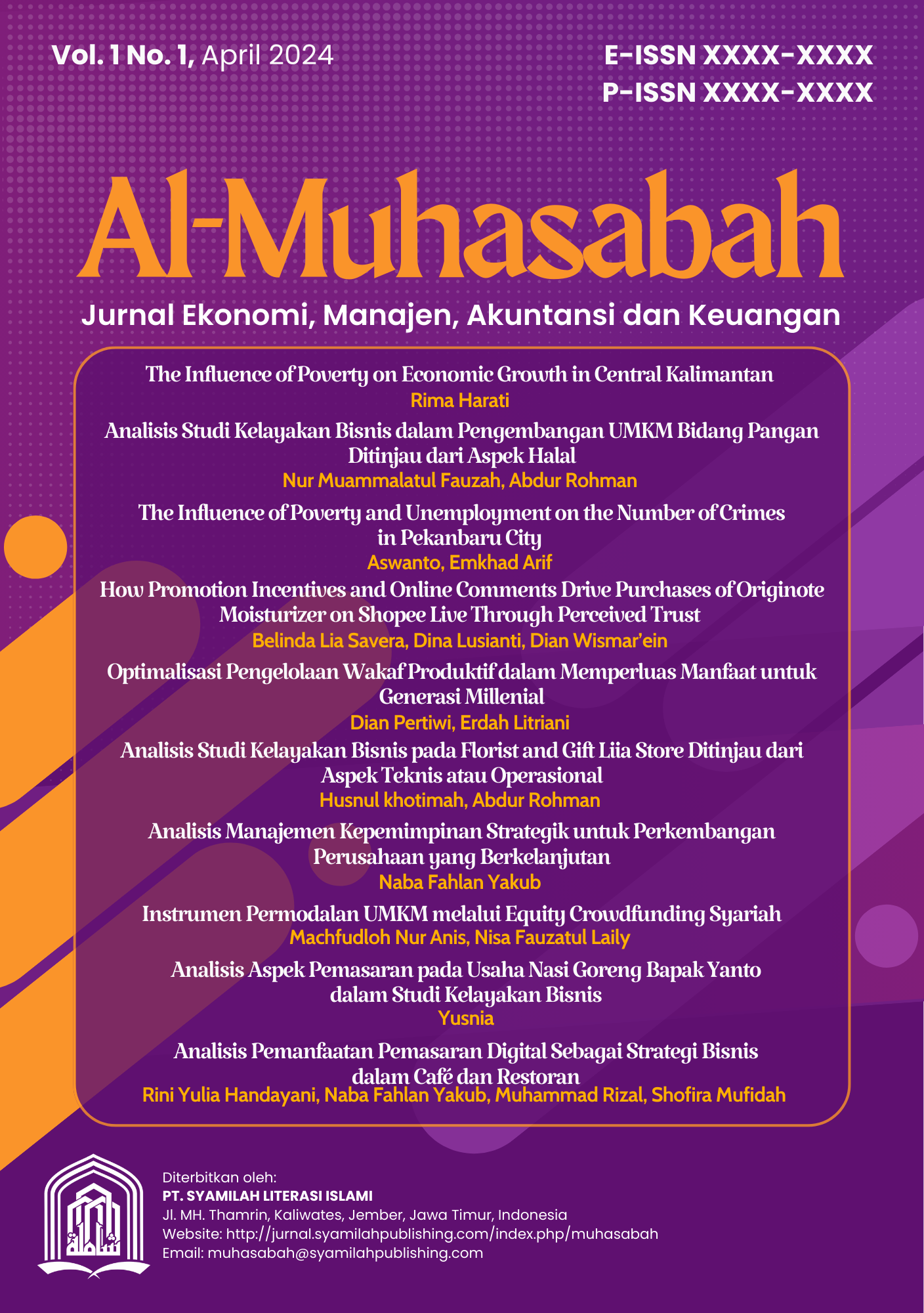
Analisis Studi Kelayakan Bisnis dalam Pengembangan UMKM Bidang Pangan Ditinjau dari Aspek Halal
Keywords:
MSMEs, food sector, halal products, business feasibilityAbstract
This study aims to gain a deep understanding of the various aspects relevant to the halal nature of food products produced by small and medium enterprises (SMEs). The research method employed is a literature study, involving the collection of data or information from various sources such as books, journals, and websites. The findings suggest that the analysis of business feasibility studies in the development of SMEs food products must ensure the halal status of the products. SMEs in the food sector must implement various production practices that meet the applicable halal standards. Based on the research, it can be concluded that in the context of SMEs business in the food sector. Product halalness is a very important factor in determining business feasibility and sustainability. External factors such as regulations, access to halal certification, and internal factors such as production management have a major influence on the business viability of SMEs. Strict regulations related to product halalness require SMEs to comply with set standards, wich can affect production costs and overall operational processes. This research hopes to provide recommendations that can help SMEs overcome challenges and enhance their business viability in producing halal and high-quality food products.
Downloads
References
Anggia, M. N., & Shihab, M. R. “Strategi media sosial untuk pengembangan UMKM.” Jurnal Terapan Teknologi Informasi 2, no. 2 (Oktober 2018): 159-170.
Arianto, B. “Pengembangan UMKM digital di masa pandemi covid-19.” ATRABIS: Jurnal Administrasi Bisnis 6, no. 2 (Desember 2020): 233-247.
Alansori, Apip & Listyaningsih, Erna. Kontribusi UMKM terhadap kesejahteraan masyarakat. Yogyakarta: Penerbit Andi, 2020.
Abdul, R. F & Naula, O. R. “Analisis Studi Kelayakan Bisnis Syariah Pada Industri Kecil Dan Menengah Dalam Mendapatkan Pembiayaan Dari Perbankan Syariah.” Jurnal Tabarru’ : Islamic Banking and Finance 5, no 1 (2022).
ASEAN. 2024. “Development of Micro, Small, and Medium Enterprises in ASEAN (MSMEs)”.https://asean.org/our-communities/economic-community/resilient-and-inclusive-asean/development-of-micro-small-and-medium-enterprises-in-asean-msme/ (diakses pad tanggal 14 April 2024 ).
Budiarto, R., Putero, S. H Suyatna, H., Astuti, P., Saptoadi, H., Ridwan, M. M., & Susilo, B. Pengembangan UMKM antara konseptual dan pengalaman praktis. Yogyakarta: Ugm Press, 2021.
Badan Pusat Statistik Indonesia. “Potensi Usaha Mikro Kecil Sensus Ekonomi 2016”. https://www.bps.go.id/id/publication/2018/12/31/e3e59cd2b44229814b5a7176/potensi-usaha-mikro-kecil-sensus-ekonomi-2016.html (diakses pada tanggal 31 Maret 2024).
Dindin, Abdurohim. Strategi Pengembangan Kelembagaan UMKM. Yogyakarta: Bintang, 2023.
Ghassani, N., & Wardiyanto, B. “Kemitraan Pengembangan UMKM. (Studi Deskriptif tentang Kemitraan PT. PJB (Pembangkit Jawa Bali) Unit Gresik Pengembangan UMKM Kabupaten Gresik).”Jurnal Kebijakan dan Manajemen Publik 3, no. 2 (Februari 2015): 142-151.
Hanim, L., Soponyono, E., & Maryanto, M. “Pengembangan UMKM Digital di Masa Pandemi Covid-19.” Jurnal Prosiding Seminar Nasional Penelitian Dan Pengabdian Kepada Masyarakat 2, no. 1 (2021): 30-39.
Kwartono, Adi. Analisis Usaha Kecil dan Menengah. Yogyakarta: Andi Offset, 2007.
Moleong, lexy j. Metodologi penelitian kualitatif . Bandung: PT Remaja Rosdakarya, 2017.
Primandari, N. R., Nazipawati, S. E., Munajat, S. P., Ir Lindawati, M. T., Sari, E. K., & SP, M. S. Strategi Pengembangan UMKM. Sleman: Deepublish, 2023.
Prasetya, Rizky. 2020. “Fungsi Utama Stabilitas Sistem Keuangan Pengembangan UMKM”.https://www.bi.go.id/en/fungsi-utama/stabilitas-sistem keuangan/pengembangan-umkm/ ( diakses pada tanggal 13 April 2024 ).
Raharjo, T. W. Pengembangan Ekonomi Masyarakat Melalui Penguatan Kemitraan Usaha UMKM, Koperasi dan Korporasi. Jakarta Media Publishing, 2018.
Rahmawati, I., Sa’adah, L., & Afiyah, S. Efektivitas Penggunaan Media Sosial untuk Pengembangan UMKM Kabupaten Jombang. LPPM Universitas KH. A. Wahab Hasbullah, 2020.
Rubiyanto, D., Wicaksono, W. P., Musawwa, M. M., Fitri, N., Yulirohyami, S. S., Isnaini, N., ... & Si, S. P. Pengembangan UMKM Berbasis Minyak Atsiri Dan Bahan Alam. Deepublish, 2023.
Sari, F. P., Liantifa, M., Yuliasih, M., Irawan, D. A., Budaya, I., Setiawan, Z., ... & Pabulo, A. M. A. Strategi Pengembangan & Pemasaran UMKM: Teori & Studi Kasus. PT. Sonpedia Publishing Indonesia, 2023.
Sastradinata, B. L. N. Strategi UMKM dan Bisnis Kreatif. Bumi Aksara, 2024.
Sri Handini, M. M., Sukaai, M. M., & MM, H. K. A. Pemberdayaan Masyarakat desa dalam Pengembangan UMKM di wilayah pesisir. Surabaya: Scopindo Media pustaka, 2019.
Sudarti I. “Tantangan Usaha Mikro Kecil dan Menengah dalam Menghadapi ASEAN Economic Community 2015.” Jurnal 3rd Economic & Business Research Festival (November 2014), 1013-1029.
Ulya , F., & Saputro, P.D. “Pengembangan UMKM Kota Surabaya di Era Industri 4.0 melalui Penerapan Financial Technology.” Jurnal Pengabdian Masyarakat ITS NU Pasuruan. 1, no.1 (2020): 1-17.
Downloads
Published
Issue
Section
License
Copyright (c) 2024 Al-Muhasabah: Jurnal Ekonomi, Manajemen, Akuntansi dan Keuangan

This work is licensed under a Creative Commons Attribution-NonCommercial-ShareAlike 4.0 International License.

